

I’ve been doing SEO since 2013. And I’ve never seen the industry collectively lose its mind quite like it has over Google AI Overviews.
Here’s the thing. The panic isn’t entirely unjustified. But it’s also not the extinction event some folks are screaming about on LinkedIn.
Let me break down what’s actually happening, what the data says, and what you can do about it. No buzzword bingo. Just the real talk.
What Are Google AI Overviews and How Do They Actually Work?
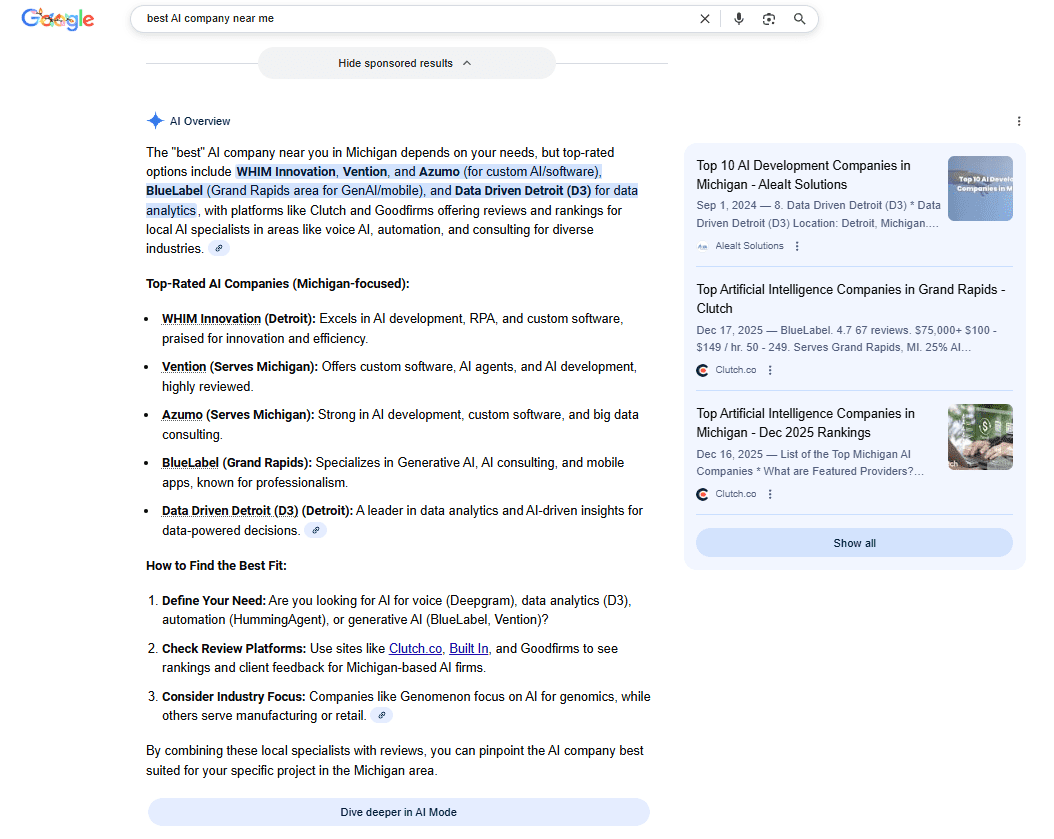
If you’ve Googled anything in the last year, you’ve probably seen these. That big AI-generated block of text that appears above all the regular search results. The one that answers your question before you even click on anything.
That’s an AI Overview. And it’s fundamentally different from the old Featured Snippets.
Google’s using something called Retrieval-Augmented Generation (RAG). Fancy term, simple concept. The AI doesn’t just pull a quote from one website like Featured Snippets did. Instead, it synthesizes information from multiple sources to create a brand new answer.
Here’s where it gets interesting. According to Ahrefs’ breakdown of AI Overviews, Google’s system runs what they call “query fan-out.” It fires off multiple related searches simultaneously. So when you search “how to start a blog,” the AI is also pulling data on hosting, content strategy, monetization, and a dozen other subtopics.
This is why comprehensive content is crushing it right now. Search Engine Land reported that pages ranking for multiple fan-out queries are 161% more likely to get cited in AI Overviews.
But here’s the part that blew my mind when I first learned it. The sources you see cited in the AI Overview? They’re selected AFTER the overview is generated. Google creates the answer first, then finds pages that match what it already wrote.
Read that again. It changes everything about how you should approach this.
The Traffic Numbers Are Brutal (But Not the Whole Story)
I’m not going to sugarcoat it. The click-through rate data is rough.
Ahrefs found that Position 1 CTR collapsed from 7.3% to 2.6% between March 2024 and March 2025. That’s a 34.5% decline. For keywords where AI Overviews appear, obviously.
It gets worse. Seer Interactive’s 15-month study across 42 organizations found organic CTR dropped 61% when AI Overviews showed up from 1.76% to 0.61%.
And Dataslayer’s research showed similar carnage. We’re talking about a fundamental shift in how search traffic works.
The real-world casualties are piling up. HubSpot’s traffic crashed 70-80%. Travel blog The Planet D lost 90% and shut down entirely. Recipe bloggers and health sites have been absolutely devastated.
But.
And this is a big but.
Sites that actually get cited IN the AI Overview? They’re seeing 35% more clicks than competitors who don’t get cited. Semrush’s comprehensive AI Overviews study found that being the source Google’s AI pulls from is actually a competitive advantage now.
So it’s not about if AI Overviews are good or bad for traffic. It’s about if you are the one getting cited or the one getting skipped.
How Often Do AI Overviews Actually Appear?
This is where the data gets confusing because different studies use different methodologies.
The Semrush study linked above analyzed 10+ million keywords and found AI Overviews appeared on about 6.5% of queries in January 2025, peaked at 25% in July, then pulled back to around 16% by November. So, Google’s clearly still experimenting.
Other studies, like Xponent21, put the number closer to 60% of US searches. The difference comes down to what keywords they’re tracking.
What we know for sure: Google rolled this out to over 200 countries and 1.5 billion users. This isn’t a beta test anymore. It’s the new reality.
Which Queries Trigger AI Overviews (And Which Don’t)
This is where opportunity lives. Not every search gets an AI Overview. Understanding the patterns lets you make smarter content decisions.
High trigger rates:
- Problem-solving queries: 74% trigger rate
- Question-based searches: 69%
- General informational queries: 59%
- Long-tail queries (8+ words): 7x more likely to trigger
Healthcare, education, B2B tech, and insurance are absolutely saturated. If you’re blogging in those spaces, AI Overviews are your daily reality.
Low trigger opportunities:
- Navigational queries (searching for specific sites): only 10%
- Brand-specific searches: around 20%
- Local queries: usually get the Local 3-pack instead
- Visual content queries
- Trending news and real-time info
See what I’m getting at? Local SEO, visual content, brand building, and experience-based narratives are defensible territory right now.
GEO vs Traditional SEO: What Actually Changed
You’ve probably seen the acronym soup floating around. GEO. AEO. LLMO. Everyone’s got a new term they’re trying to make happen.
Here’s my brutally honest take. It’s mostly the same game with some rule changes.
GEO (Generative Engine Optimization) is just SEO adapted for AI systems.
Search Engine Land’s analysis of 8,000 AI citations found that adding statistics boosts visibility by 37%. Expert quotes help. Citing credible sources within your content helps.
But three shifts actually matter:
- Brand mentions now outweigh backlinks. I know. Wild. But AI systems scan the broader web beyond just hyperlinks. Unlinked mentions of your brand carry real weight now. Building a recognizable name matters more than ever.
- Topical authority beats keyword stuffing. Pages ranking for multiple related queries dramatically outperform single-keyword optimized pages. You need to become THE authority on narrow topics, not cover everything poorly.
- Content must be extractable. Clear question-based headings. Answers in the first sentence after each heading. FAQ sections. Tables. Numbered lists. Make it easy for AI to grab what it needs.
What’s Actually Working for Blogs Right Now
I’ve been watching what’s working for my clients and across the industry. Here’s what moves the needle.
- Structure your content for extraction. Put a clear 45-50 word answer right after each heading before you elaborate. The HOTH’s tactical guide on AI Overview citations found that deep, content-rich pages get 82.5% of citations. Thin content gets nothing. FAQ sections with proper schema markup can increase citation rates dramatically.
- Build real topical authority. 51% of AI Overview citations go to pages ranking for BOTH the main query AND related questions. Create hub content that answers everything someone might ask about your topic. Become the obvious choice.
- Invest in brand visibility. Popular brands get 10x more AI Overview features than unknown sites. Get on Reddit (21% of AI Overview citations come from there). Build your YouTube presence (18.8% of citations). Use HARO. Create original research. Make your name appear everywhere.
- Double down on what AI can’t replicate. Personal experience. Original data. Actual expertise. Human stories. A recipe blogger’s story about developing a dish over 20 attempts? AI can’t generate that. Your cannabis industry insights from 10+ years in the trenches? Can’t be faked.
- Diversify your traffic NOW. 39 Celsius’ analysis of traffic drops for small businesses makes one thing clear. Depending solely on Google organic is increasingly risky. Build your email list. Get serious about social. Consider platforms like Perplexity and ChatGPT as emerging traffic sources.
Google’s Still Figuring This Out Too
Remember when AI Overviews told people to eat rocks and put glue on pizza back in May 2024? Yeah. Google’s still iterating.
They implemented guardrails after those viral disasters. Better detection of nonsensical queries. Restrictions on user-generated content. Enhanced protections for health topics.
The December 2025 Gemini 3 upgrade brought smarter model routing. Ad integration within AI Overviews jumped from 3% in January to 40% by November. They’re monetizing this thing hard.
Most interesting? Coverage actually pulled back from July’s 25% peak to about 16% by November. Google’s testing, learning, adjusting. Expect continued volatility.
What the Experts Are Saying
Search Engine Journal interviewed seven SEO experts about where this is all headed. The consensus? Brand matters more than ever. Deep expertise beats surface-level content. The gap between generalists and true specialists is widening.
By 2028, Semrush predicts AI search visitors will outnumber traditional search visitors. Traditional Google Search produces clicks 24% of the time. AI Mode? Just 4.5%.
The writing’s on the wall. Adapt or watch your traffic disappear.
The Bottom Line
AI Overviews aren’t killing blogs. They’re killing lazy blogs.
The “what is X” and “how to do Y” content that built a lot of successful sites? That’s facing real structural headwinds now. AI handles those queries well enough that users don’t need to click through.
But content with genuine experience, original research, nuanced judgment, and authentic expertise? That’s actually MORE valuable now. Because AI can’t generate it.
Sites appearing in AI Overviews get 3.2x more clicks for transactional queries than competitors who get excluded. The traffic that does come through often converts better because those users already got the basic answer and want to go deeper.
So here’s what you do:
- Build comprehensive content that covers topics deeply
- Structure everything for AI extraction
- Invest seriously in brand visibility
- Create content only YOU can create
- Diversify away from Google dependence
The bloggers who treat this as a challenge to level up will come out stronger. The ones waiting for things to go back to normal?
They’ll be waiting a long time.
I’ve been feeding the algorithm since 1996. It’s always evolving. The question is if you’re evolving with it.
[…] seen AI Overviews tank click-through rates on blog content while simultaneously increasing leads and revenue from service pages. The surface metrics look bad. […]
[…] is tracking rank shifts. Another has a Large Language Model (LLM) window open. The third is showing Google AI Overviews. The rest? Well, those are for the deep-dive data that keeps me […]