
Local SEO blog
ChatGPT Only Reads 200 Characters of Your Page
September 22, 2026
That headline needs a careful explanation.
The roughly 200-character figure comes from reporting published by Search Engine Land on August 17, 2026. The report reviewed analysis of ChatGPT’s retrieval system and described a fast path where the index entry can store the URL, the page title, and a short snippet of roughly 200 characters anchored on the H1. A separate reading cache stores full pages, and paid thinking mode can open pages live, so that figure describes the index snippet rather than everything ChatGPT reads.
I did not measure this myself. The behavior comes from observed testing, the systems change, and the exact numbers deserve a fresh check as ChatGPT updates its search stack.
The practical lesson still matters for every electrician, roofer, plumber, and HVAC company owner with a website.
The opening of a page carries a lot of weight.
ChatGPT has its own retrieval process
ChatGPT search appears to use an internal retrieval system called Labrador, according to the Search Engine Land reporting.
That system has several layers.
The first layer is a discovery index. It helps ChatGPT find possible pages for a question. The indexed entry can include the URL, the full page title, and a short snippet of visible text near the H1.
The second layer is a reading cache. This stores full pages that ChatGPT has already fetched and converted into a format it can process.
The third layer includes a limited number of live page openings. Those live reads can provide fresher information, though they require more time and retrieval resources.
That creates an important distinction.
ChatGPT may find your page without fully reading it. It may cite your page based on a short indexed passage. It may also use a cached copy from an earlier visit.
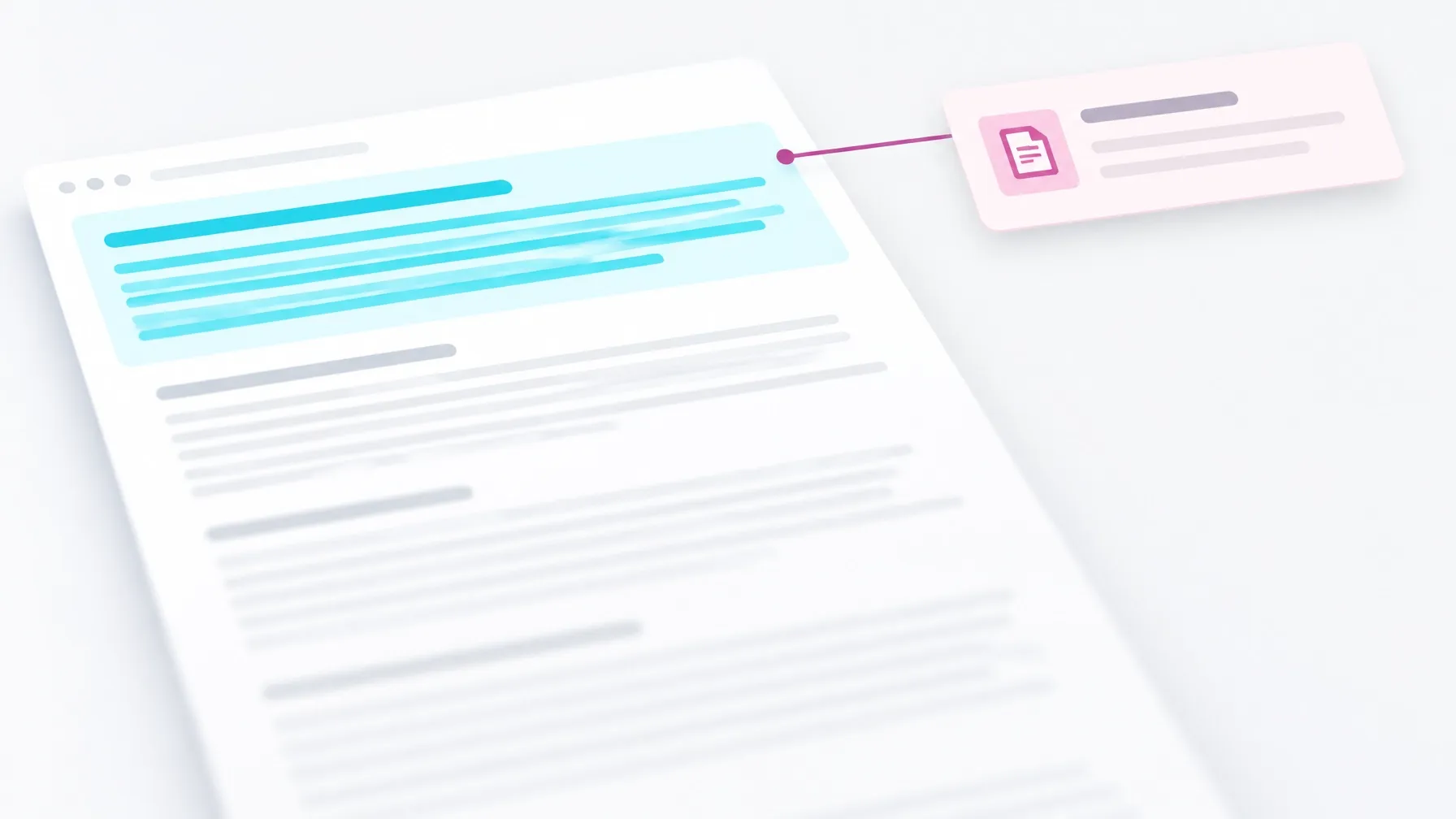
The fast path appears to give special importance to the page title, H1, and visible text directly around the H1. Search Engine Land reported that this passage can be around 200 characters.
Think of it like a librarian scanning the title and first sentence of a book before deciding if the book belongs on the research cart.
If the answer to the customer’s question appears in that opening section, your page has a better chance of being useful during that first pass.
Why contractors feel this first
Most contractor websites have the same problem.
The homepage opens with a huge hero image, a slogan about quality, a button that says “Get Started,” and a paragraph about friendly service.
That design can look polished to a person. It gives an AI system very little factual material to use as a standalone answer.
“Quality you can trust” does not answer a customer’s question.
“Serving the community for over 20 years” does not explain which roofing materials you install.
“Fast, reliable electrical service” does not tell ChatGPT what areas you serve or what an electrical panel upgrade includes.
A retrieval system needs clear facts. It needs sentences that can stand on their own after being separated from the rest of the page.
For an electrician in Grand Rapids, the opening under a heading about panel upgrades could say:
I install 100-amp and 200-amp electrical panel upgrades for homeowners in Grand Rapids, Ada, and Kentwood, with most projects completed in one to two days after the permit review.
That sentence gives the service, location, project type, and timeline.
A roofer could write:
I replace asphalt shingle roofs for homeowners in Grand Rapids, Wyoming, and Walker, including tear-off, decking inspection, underlayment, flashing, ventilation, and cleanup.
That sentence has useful pieces an assistant can understand and reuse.
The same principle supports better human experience, better traditional SEO, and better AI search for local contractors.
Directories still matter in local AI answers
Your website is one source.
Your Google Business Profile, directory listings, review pages, and industry profiles can become sources too.
The citation research I reviewed from Cheers analyzed 32 home-services prompts and classified 356,019 citations across 100 United States and Canadian metro areas and four AI engines during the 28 days ending September 2, 2026.
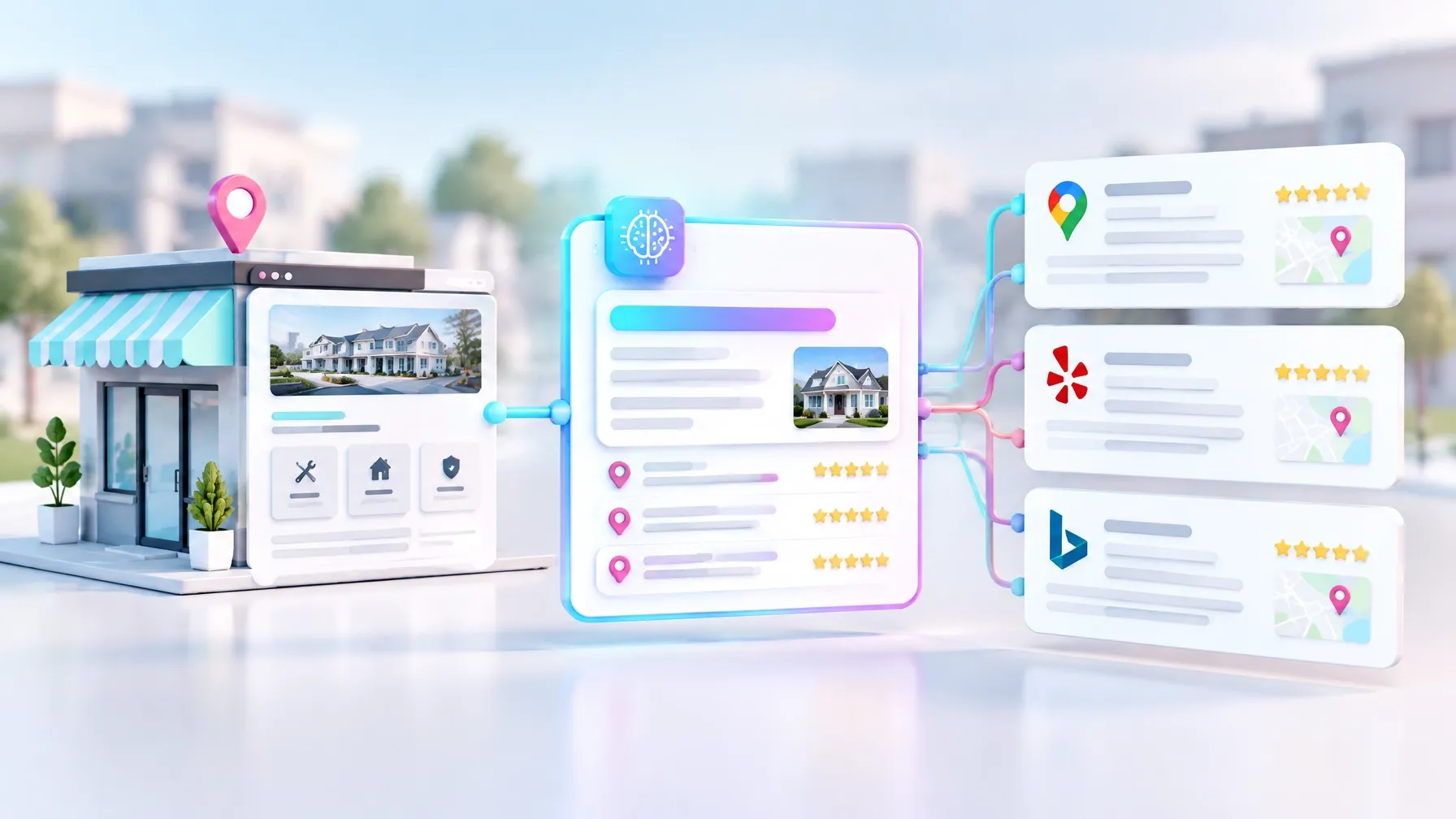
For ChatGPT, 48.8% of citations went to contractor websites, while directories and review platforms received 44.7%.
That is close enough to change how I would approach a local SEO project.
A neglected listing can still appear in an AI answer. A review platform with outdated service areas can influence what a customer sees. A directory profile with an old phone number can create confusion before the customer ever reaches your website.
Cheers found different source patterns across different assistants. Gemini cited contractor websites more often in its sample. ChatGPT split its citations between contractor sites and third-party platforms.
This gives local businesses two jobs.
First, publish accurate information on your own site.
Second, keep the public listings that represent your business accurate and consistent.
That includes your business name, address, phone number, service categories, hours, service areas, and review profile.
Citation screenshots prove very little
I understand why business owners save screenshots of ChatGPT answers.
It feels good to see your company named.
A screenshot can show that your business appeared for one prompt during one run. It cannot establish a stable pattern by itself.
Aysa’s writeup of the retrieval pipeline research describes hidden retrieval pipelines that can produce different source sets for the same prompt. A page can appear in one answer and disappear in another. The answer can stay broadly similar while the cited pages change.
I treat AI visibility as a measurement problem.
I save the prompt, assistant, location context, date, companies named, and pages cited. I repeat important prompts over time and look for patterns.
That gives me something useful to work with.
One screenshot gives me a moment.
Repeated testing gives me evidence.
What to change on your website
Put the answer first
Place the direct answer in the first sentence under each important heading.
Name the service, city, and outcome in plain language.
For example:
I repair tripped breakers and faulty circuits for homeowners in Lansing, with same-week appointments available for many residential electrical problems.
That sentence works for a customer scanning the page. It also gives a retrieval system a clean passage to understand.
Write standalone answers
Each section should make sense if someone reads only that section.
A service page about roof replacement should answer the basic questions inside the page itself. Explain the service, who needs it, what the work includes, how long it usually takes, and what affects the price.
A reader should not need to hunt through three other pages to understand the answer.
Use real specifics
Specific details make your page more useful.
Mention brands you install. Name common materials. Explain what a job includes. Describe difficult conditions such as steep roofs, knob-and-tube wiring, old panels, tight crawl spaces, ice dams, or permit requirements.
You can discuss price ranges carefully when your business is comfortable publishing them. Explain what changes the final estimate.
A page with real specifics has more substance for customers and retrieval systems.
Keep your business entity consistent
Use the same business name, service names, city references, address, and phone number across your website, Google Business Profile, and important listings.
Small inconsistencies create unnecessary work for search systems and customers.
One page should not call you “Smith Electrical Services,” another should say “Smith Electric,” and a directory should use an old business name from 2018.
Pick the public-facing version and keep it consistent.
Add matching schema
Use structured data that matches information visible on the page.
A local business schema can help describe the business. Service schema can describe a service page. Review markup needs to follow the rules for the reviews displayed on the page.
Schema supports understanding. It cannot rescue a page filled with vague copy or details that visitors cannot see.
Maintain your Google Business Profile
Keep your primary category accurate.
Add relevant services. Update hours. Upload real project photos. Answer reviews. Correct old phone numbers and service areas.
Google Business Profile information matters for local discovery, and the profile can also become part of the public information ecosystem that assistants use when forming local answers.
Fix the boring technical stuff
Make important pages crawlable.
Make them load quickly.
Use real HTML text instead of placing every important fact inside an image. Give images useful alt text. Keep service and location pages accessible without a login or complicated interactive tool.
A beautiful page that hides the service area inside a JavaScript widget creates avoidable friction.
This is the boring work behind no fluff SEO for contractors. It also supports electrician marketing that actually works because customers can find and understand the service details.
Build topical authority around the service
One service page rarely answers every question a buyer has.
An electrician could publish useful pages about panel upgrades, circuit breakers, whole-home generators, EV charger installation, electrical inspections, and permit requirements.
A roofing company could cover roof lifespan, shingle types, storm damage, flashing, ventilation, insurance inspections, and replacement timelines.
That group of connected pages helps establish the business as a useful source for a topic. I wrote more about building topical authority if you want the deeper version.
The pages should connect naturally through internal links.
Each page should answer a real customer question with details from the company’s actual work.
That supports answer engine optimization and generative engine optimization alongside traditional SEO.
Test your own website for free
You can run a basic test in a few minutes.
Open ChatGPT and ask the exact question your customers ask, including the city.
Try prompts like:
Who are the best residential electricians for panel upgrades in Grand Rapids, Michigan?
Which roofing companies in Grand Rapids replace asphalt shingle roofs and offer free inspections?
What should I look for when hiring an HVAC contractor in Kentwood, Michigan?
Ask Gemini and Perplexity the same questions.
Use a fresh chat for each assistant. Keep the wording identical. Record the date, location settings, companies named, citations shown, and the pages linked.
Then ask a follow-up question:
Which source supports that recommendation?
Look at the pages that appear.
Do the assistants cite your service page, your homepage, your Google Business Profile, a directory, or a review platform? Do they name a competitor that has clearer service details? Do they pull from an outdated listing?
Run the test again later.
You may see different answers. That result is useful. It shows you how much confidence to place in a single screenshot and which sources deserve cleanup first.
What this means for roofing and electrical marketing
Roofing organic search growth depends on more than publishing a city page and waiting.
It depends on clear service information, strong local signals, useful project details, accurate listings, and a site that search systems can read.
Electrician marketing that actually works has the same foundation.
Your website should explain what you do, where you do it, what the job involves, and what a customer should expect before the phone rings.
AI assistants add another place where those facts can surface.
They also add another reason to stop hiding your best information behind stock photography and vague slogans.
If you want a second set of eyes on the technical and content basics, you can request a free SEO audit.
The 200-character observation may change as ChatGPT changes.
Clear, specific, crawlable service information will keep helping people find and understand your business.
Make Randi One of your Preferred Sources
Sources
- ChatGPT retrieval stack and indexed page snippets, Search Engine Land, August 17, 2026
- What sources AI search engines cite for local queries, Cheers, updated September 2, 2026
- ChatGPT citations change when hidden search pipelines switch, Search Engine Land, July 8, 2026
- ChatGPT citations and hidden retrieval pipelines, Marius Dosinescu, Aysa AI, July 2026