
Local SEO blog
What Happened to Fluresh in Grand Rapids, Updated November 2026
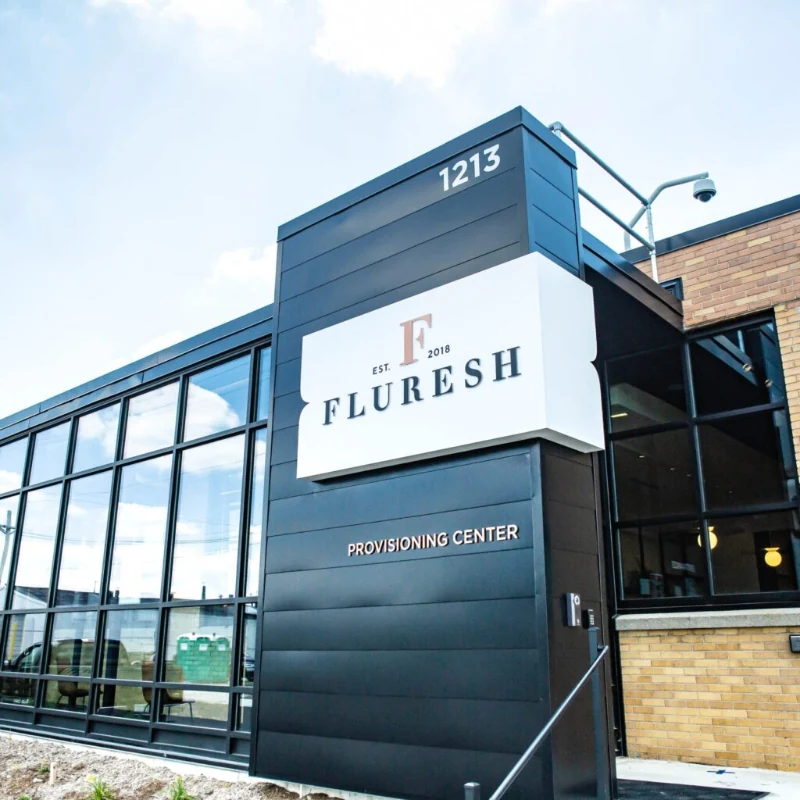
The Fluresh provisioning center at 1213 Phillips Ave SW. Photo supplied by the client.
On February 7, 2020, Fluresh opened at 1213 Phillips Ave. SW as the first licensed medical marijuana provisioning center in Grand Rapids. Michigan Public covered the opening as a milestone. Recreational sales came later that year.
The shop started fast. When it opened, it was clearing about $1.5 million a month in revenue, according to CEO Brandon Kanitz in reporting by Crain’s and Four20 Post.
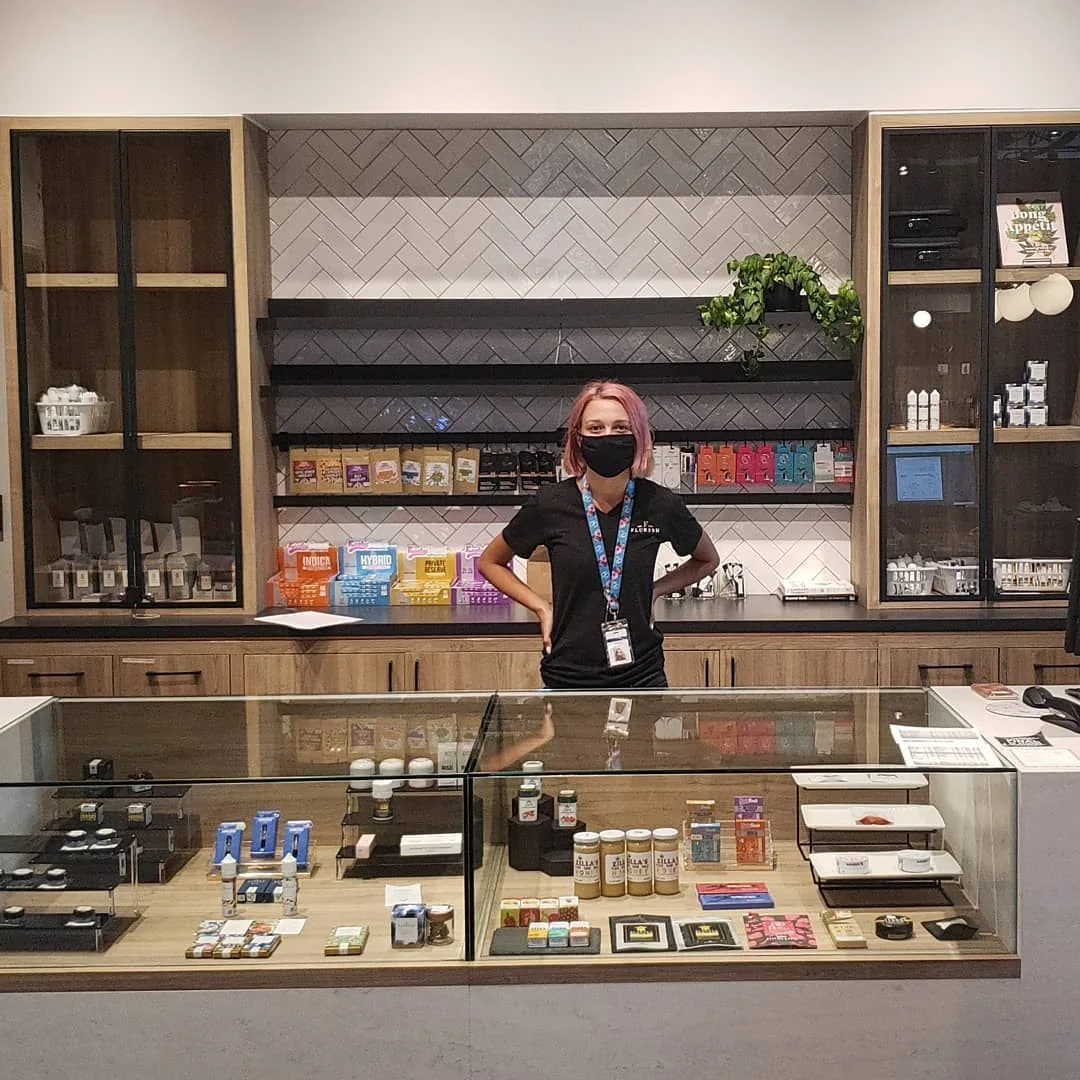
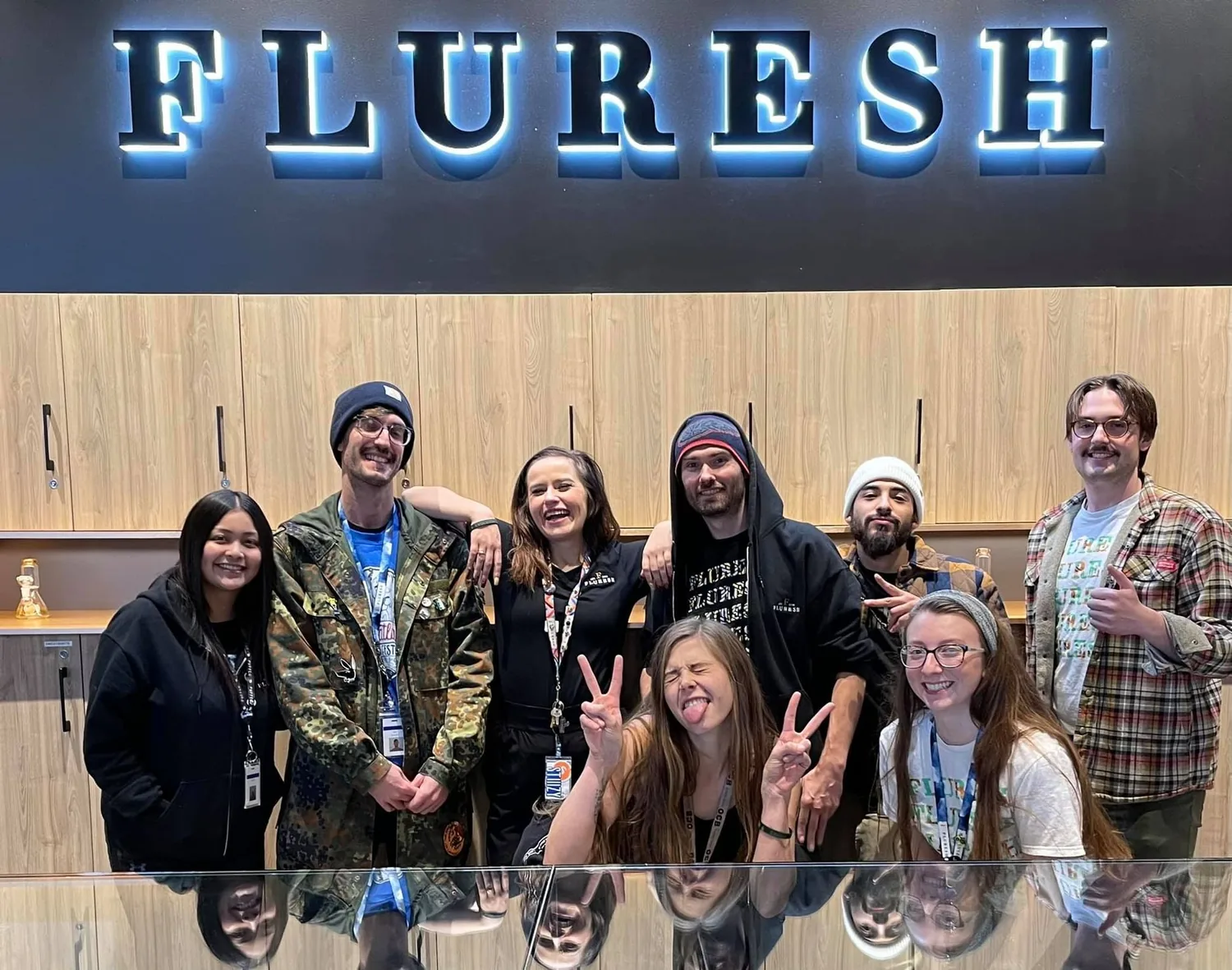
Behind the counter. Photo supplied by the client.
People search “Fluresh Grand Rapids” now because they want to know what happened to it. I wrote content for this shop through Evergreen Digital and I liked the people there. The short answer is that the market moved faster than the retail business could.
Michigan’s price race changed the math
Michigan allowed a large number of cannabis business licenses. As supply grew, prices fell. The average recreational ounce went from more than $500 in the early market to roughly $60.
That price compression hit retailers and growers statewide. Fluresh faced more competition around Grand Rapids, while customers’ per-ounce prices kept shrinking. Kanitz told Crain’s the retail shop’s revenue had fallen below $200,000 a month by the end and that the store had been losing money for a while.
The 2021 boycott and why Fluresh ended up on the list
In 2021 a boycott spread through Michigan cannabis communities, and Fluresh’s logo was on the graphic.
The fight was over medical marijuana caregivers. The Michigan Cannabis Manufacturers Association, a trade group formed in 2019 and led by lobbyist Steve Linder, pushed to tighten caregiver rules. The proposals moving through Lansing included cutting caregiver plant allowances from 60 to 10, dropping patient plant counts from 12 to three, requiring lab testing on caregiver harvests, and restricting outdoor and home grows. Lansing City Pulse reported the proposals and the boycott in May, and Michigan Advance covered the caregiver rally at the Capitol that September.
Who the boycott was aimed at
Activists organized under #NOCHANGES. Retailers and customers started boycotting the association’s members, including Skymint, LivWell, Common Citizen and High Life Farms. The list then widened to brands affiliated with those members. Fluresh was on that second list, alongside Two Joints, Jolly Edibles, North, Short’s Brewing, Petra, Wana, Sherbinski’s, Kiva Confections, DNA Genetics, Clout King, Chief Solventless and Crown Jewels.
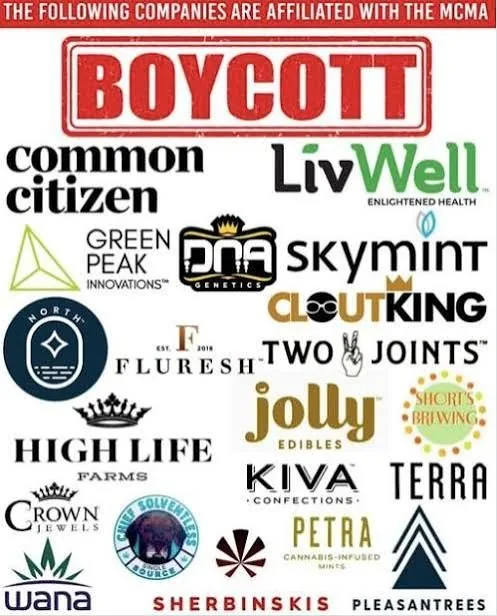
The boycott graphic that circulated on social media in 2021. Image supplied by the client.
What the graphic did and did not say
One thing is worth being precise about. That graphic named companies affiliated with the association’s members. Reporting identified the members as Skymint, LivWell, Common Citizen and High Life Farms. Nobody published evidence that Fluresh itself lobbied for the caregiver changes. The brand landed on a list because of who it sat beside in a supply chain.
The fallout reached the association as well. Pleasantrees CEO Randy Buchman resigned as its president, LivWell executive Shelly Edgerton replaced him, and the group pulled its member names off its own website. The Michigan Cannabis Industry Association came out against the caregiver proposals.
There is a search lesson in that year. A boycott graphic is a document that can outrank a brand for its own name. Anyone typing Fluresh into Google in 2021 could meet a list before a menu, and the business has almost no control over that once the image is loose. What it can control is how much accurate information about itself is already published and indexed.
A trophy year and then a rebrand
The shop won the city’s reader poll in 2022, taking first place for Best Cannabis Provisioning Center in the Revue Best of the West awards. A trophy does not pay rent, and prices kept sliding anyway.
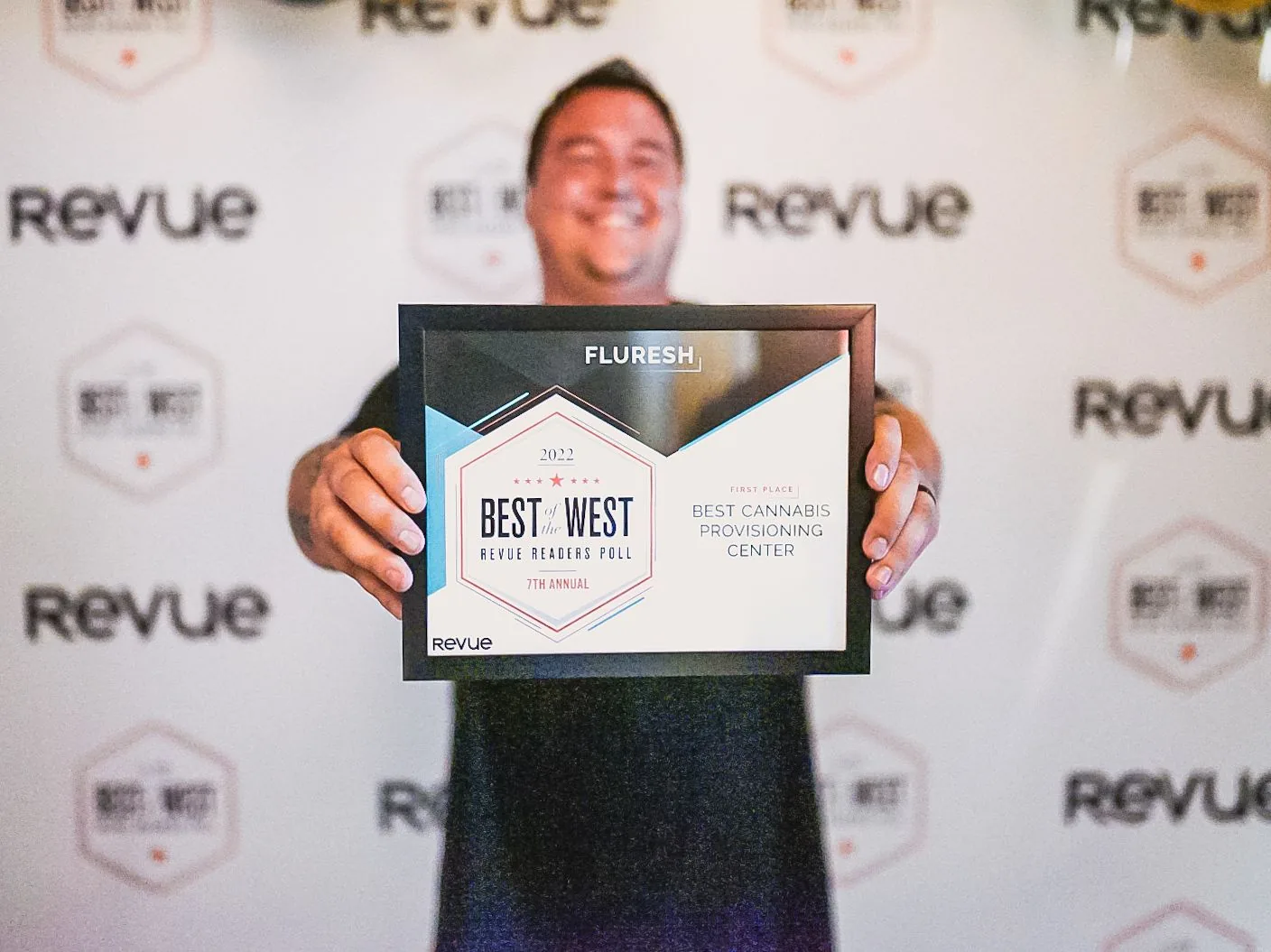
The 2022 Revue Best of the West award for Best Cannabis Provisioning Center. Photo supplied by the client.
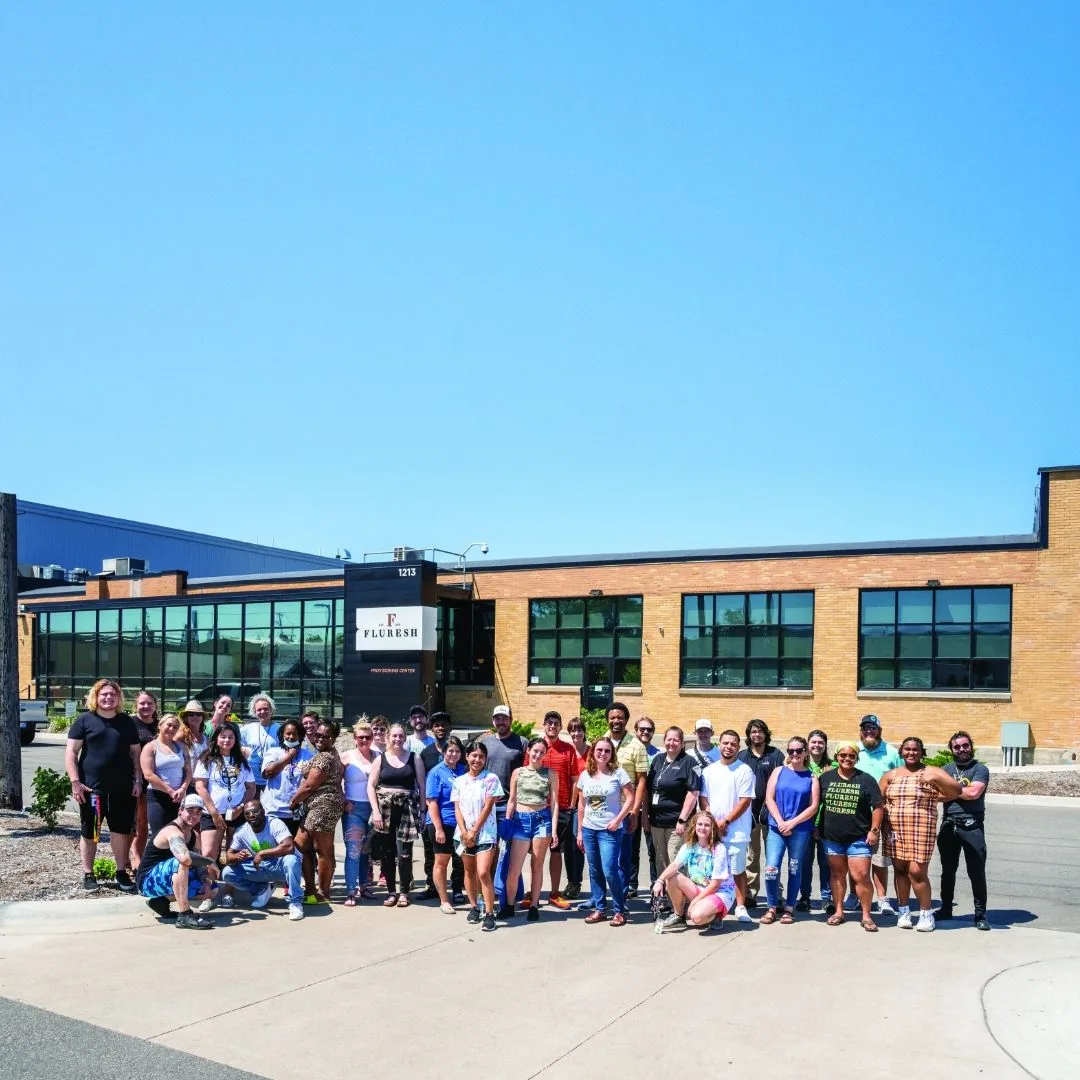
The whole team outside the shop. Photo supplied by the client.
In August 2023, the company rebranded from Fluresh to Tend.Harvest.Cultivate., or T.H.C. Fluresh remained one of its product brands alongside Carbon, Jasper and Mr. X.
The company described the move as a house of brands strategy. The idea was to serve different customers through distinct brands, while the parent company continued cultivation, processing and wholesale sales. Its Grand Rapids operation included a 55,000 square foot cultivation facility supplying flower and products to other operators in Michigan.
The rebrand changed how the company presented itself. Retail still had to work in a market where prices kept falling and competitors kept multiplying.
The grow in Adrian closed in 2024
The company shut its $46 million cultivation facility in Adrian in 2024. It cited upside down economics and a $500,000 loss after defaulting on loans from Flagstar Bank, and the average ounce price was about $74 at the time. New shops kept opening around Grand Rapids that same year, which is the shape of a statewide supply glut and a local competition problem landing together. Coverage of the company points to those two pressures rather than any single bad decision.
Restructuring led to curbside, then closure
In January 2026, T.H.C. completed a restructuring that shed $110 million in debt and added $5 million in new capital, according to Crain’s. Employees pitched a plan to keep the Grand Rapids shop going.
A customer being helped at the counter. Photo supplied by the client.
The store shifted to curbside service five days a week instead of seven. It removed the showroom, and curbside already accounted for about 60 percent of sales. Kanitz told Four20 Post that keeping a full retail operation would have meant a $500,000 loss in 2026. Around 25 jobs were affected during that stage.
The shop closed permanently on January 28, 2026. A Michigan WARN notice filed January 30 lists 15 affected employees, including retail associates, a shift lead, delivery drivers and inventory staff.
As of this November 2026 update, the company’s contact page says the retail location is permanently closed. The parent continues as a cultivation, processing and brand portfolio company, and you can see what it does now at Tend.Harvest.Cultivate.
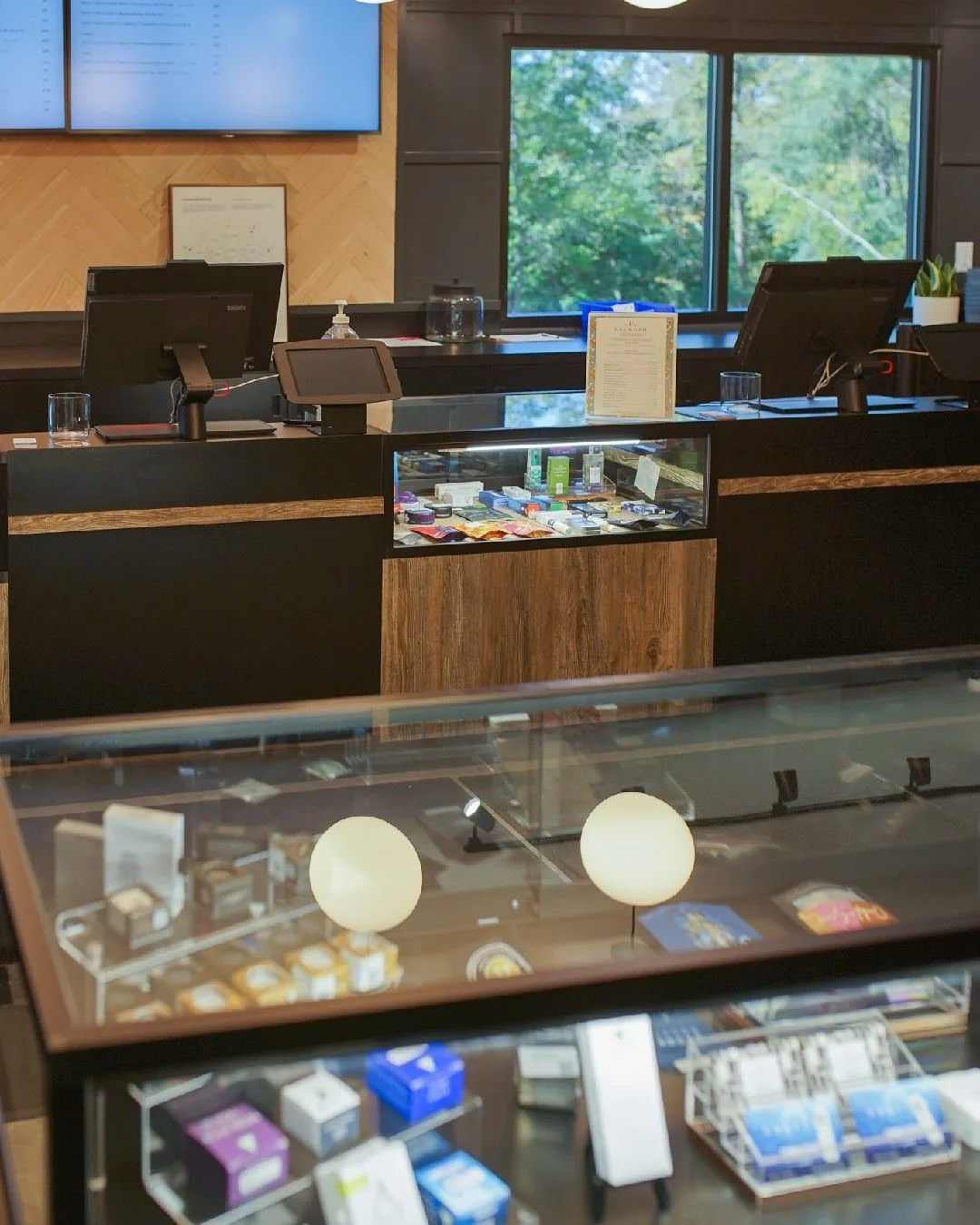
The sales floor, still set up and no longer in use. Photo supplied by the client.
What the SEO data shows
The engagement ran from late October 2025 through May 2026, about seven months, and the May report was the final deliverable. Kickoff landed around October 24 based on the onboarding document. That put the content work about three months ahead of the shop closing, with four months of it running after.
I worked on SEO content for Fluresh through Evergreen Digital. Brady Madden provided strategic direction on the agency account. My work included keyword research and content execution, from writing and imagery through upload and publishing.
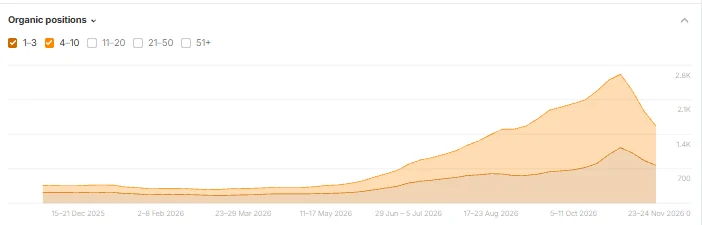
Organic positions for Fluresh. Ahrefs data from our own account.
What the site-wide charts show
Keyword positions climbed for most of 2026. Positions one through three and four through ten both rise from December 2025 through the summer, peak in the October to early November range, and then drop hard in the last week of the data.
Non-branded traffic outgrew branded traffic, which is the half of the picture a content program can actually build.
Referring domains went from roughly 300 to about 1,100 across the year. Links kept arriving even as the retail business was in trouble.
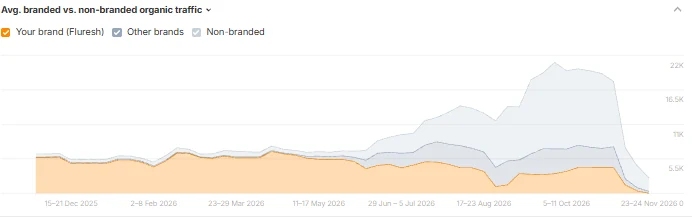
Branded versus non-branded organic traffic. Ahrefs data from our own account.
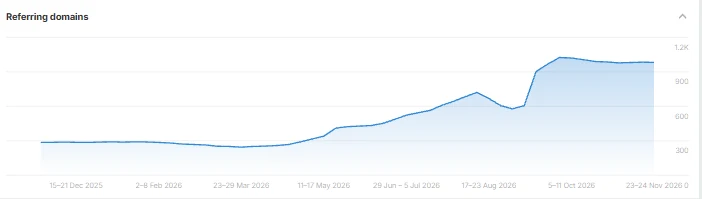
Referring domains for the site. Ahrefs data from our own account.
The pages I built
Across that engagement I created the content pages that carried this site’s organic traffic, and I wrote and implemented every one of them.
This is our own SEO Gets data for the last eight months, a window that runs past the end of the engagement. Eleven of those rows are mine. The two in that export I did not build are the Google Business Profile landing page at the top and the store menu link at the bottom.
| Page | Position | Clicks | Impressions |
|---|---|---|---|
| Liquid Diamonds Concentrate Guide | 1 | 3.3K | 523.5K |
| Homepage | 1 | 3K | 268.4K |
| CBG vs CBD | 1 | 2.5K | 188.5K |
| Weed Carts Explained | 1 | 2.1K | 433.9K |
| Best Cannabis Drinks in Michigan | 3 | 1.2K | 24.3K |
| Michigan Cannabis Laws | 1 | 1.1K | 305.2K |
| Edible Gummies vs Vapes | 1 | 703 | 48.7K |
| Cannabis Edibles Michigan | 1 | 652 | 64.3K |
| Best THC Gummies in Michigan 2026 | 1 | 486 | 33K |
| How to Store Cannabis | 1 | 475 | 55.6K |
| What Is a 2G Disposable | 1 | 463 | 96.4K |
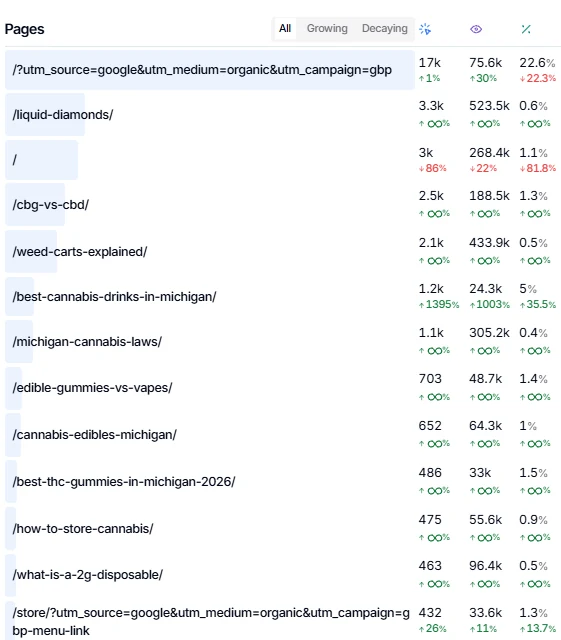
The SEO Gets export those eleven rows come from. Data from our own account.
What the eleven pages added up to
Eleven pages produced about 16,000 clicks and roughly 2 million impressions, and ten of the eleven held position one for the queries they were written for.
A few of those rows are worth reading one at a time. The Michigan cannabis laws page held position one and pulled 305,000 impressions. The cannabis drinks page reached position three and still earned 1,200 clicks, which shows how much a page can collect from a competitive query without owning the top slot.
The Liquid Diamonds guide is the row I keep coming back to. It launched in spring 2026 with nothing ranked and ended up pulling 523,500 impressions. That page is gone now. In its place is a closure notice thanking people for their support, seventeen words where the guide used to live.
How the Liquid Diamonds page grew
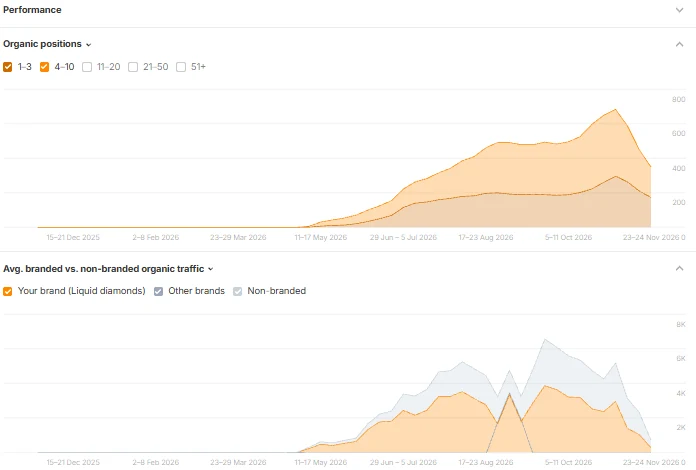
The Liquid Diamonds guide, keyword positions above and traffic split below. Ahrefs data from our own account.
Nothing on that chart happened quickly. Both position bands sit at zero through the spring, lift in June, then climb across the summer and peak in the first week of November. The four to ten band runs above the top three for most of that climb because more of its keywords land in the middle of page one than at the very top.
By August the guide held 342 US organic keywords with 159 in the top three, including position one for rosin diamonds at 2,700 monthly searches and liquid diamonds vape at 1,900.
The second chart answers a question clients ask about product pages. Non-branded traffic on that single page peaked near 8,000 visits a month in early October, roughly double the line for searches that already contained the brand name, and it stayed above the branded line for most of the second half of the year. People were finding that guide by asking what a product was.
The page that outlived the engagement
Weed Carts Explained tells the same story with a longer tail. It went live near the end of the work with nothing ranked, and this is its chart through November 23.
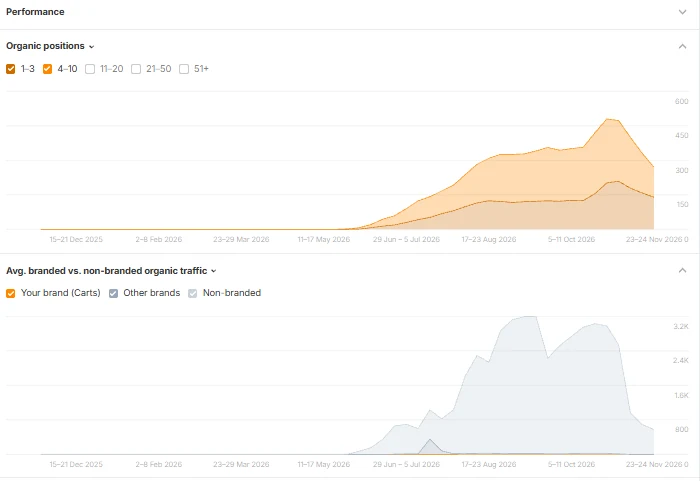
Weed Carts Explained, keyword positions above and branded versus non-branded traffic below. Ahrefs data from our own account.
Both position bands stay flat near zero until around June, climb steeply through July and August, and the top-three line peaks near 560 keywords in October. Branded traffic on that page stays low all year while non-branded climbs to roughly 3,200 visits a month by late fall.
That traffic kept climbing after the final report was delivered in May. Someone searching what a cart is does not need your door to be unlocked, so the page kept working on a store that was no longer there.
Pages keep doing this once they rank, which is the whole argument for starting them early and also the uncomfortable part of this case study. Content can bring in search demand. It cannot fix the economics of a store that was losing money on every ounce it sold at $60.
I wish the content had started earlier
I wish the content work had started years earlier. Sitting here now, that reads as plain regret. Good search content is a slow asset, and it was never going to outrun a market selling ounces around $60.
Starting that work in the final year of a business is the worst possible timing. The operators who begin early own their category by the time the price war arrives. For a dispensary that means product education, local pages and a brand people already trust, all built well before the pressure hits. My pages on dispensary SEO in Michigan and ranking a dispensary on Google Maps cover parts of that work.
Five lessons for dispensary owners
- Calculate what the showroom earns. If price compression is in your market, compare retail revenue per square foot with the cost of keeping the doors open. Make that decision early.
- Build content around product questions. Educational pages can reach people who are researching a product, even when a store visit is not part of their plan. My guide to cannabis SEO keywords explains how I approach those searches.
- Start years ahead of the downturn. Pages take months to rank and the value compounds from there. A content push in the final year has almost no runway.
- Watch branded and nonbranded traffic separately. The two move for different reasons. Nonbranded growth tells you people are discovering you for what you sell rather than for who you are.
- Keep two ledgers. An organic search chart measures visibility. A business ledger measures revenue, costs and profitability. Both matter, and they answer different questions.
Fluresh was first in Grand Rapids, built a name people recognized, and rebuilt itself as the market shifted. The shop still closed and fifteen people lost their jobs. I am grateful I got to work with that team, and I am sorry the content started so late in the story.
For dispensary operators reviewing their own search visibility, I offer a free SEO audit.