

I’ve been doing SEO since 2013. In that time, I’ve helped a massage therapist grow from a solo practitioner to a team manager. I watched a personal chef go from scraping together clients to clearing $100k in her first year. I helped a furniture refinisher double his income.
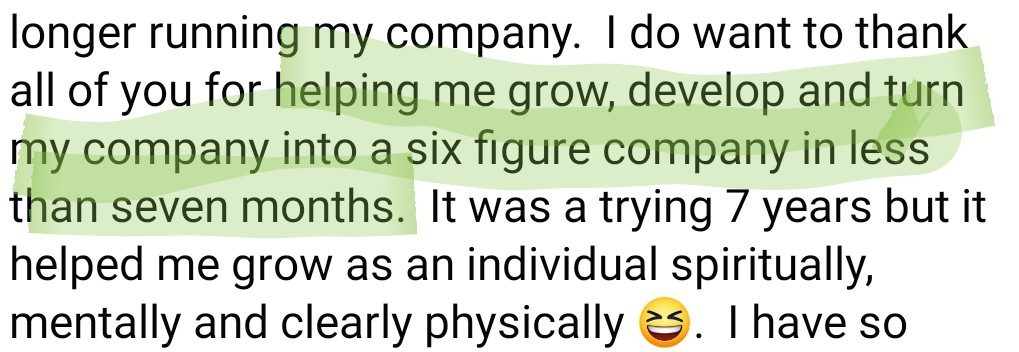
Not one of them ever said, “Randi, SEO did this.”
Not one.
The Invisible Win Problem
Here’s the thing. SEO success is a slow burn.
It doesn’t announce itself with a flashing banner that says “YOUR ORGANIC TRAFFIC DROVE THIS SALE.”
The customer who found you on Google three months ago, clicked your service page, bookmarked it, came back last week, and finally booked? That’s invisible to most business owners.
They remember the word-of-mouth referral. They remember the one Facebook post that blew up. They remember the ad they ran for two weeks in 2022.
They don’t remember the Google search. The customer doesn’t tell them how they found them. And the business owner never asks.
So SEO gets no credit. Every single time.
The Case That Almost Broke Me
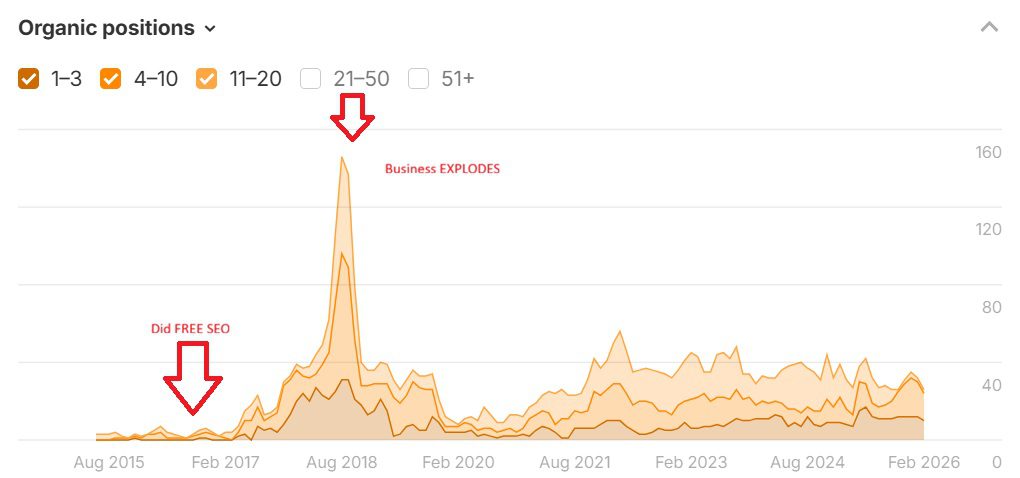
I had a client. Revenue tripled in 3 months. I mean tripled. We went from a handful of organic leads per month to consistent, qualified traffic hitting the pages that actually drive revenue. Not the blog. Not the about page. The service pages. The location pages. The pages where people called in and made appointments.
Real leads. Real transactions.
And then they told me they weren’t sure SEO was working.
I had to take a breath.
I pulled the data. I showed them the before-and-after. Organic sessions to revenue-generating pages, up 218%. Form submissions from organic traffic, up 340%.
They nodded politely and said without speaking
“It’s all me, I’m just really popular”
The Attribution Gap Is Real
This isn’t a new problem. According to a BrightEdge study, organic search drives over 53% of all website traffic across industries. More than half. And yet, SEO remains one of the most underfunded and most doubted channels in the mix.
Here’s why I think it happens. Paid ads give you a dashboard. You spend $500, you see clicks, you feel the connection. It’s psychological. The feedback loop is immediate and visible.
SEO’s feedback loop is at least 3 to 6 months. Sometimes longer. The cause and the effect are so far apart in time that most humans can’t draw the line between them without help.
And most SEOs don’t help them draw that line. That’s on us, honestly.
What I Do Differently Now
I don’t wait until the end of a campaign to show results. I document aggressively from day one.
Month one, I capture a baseline screenshot of every revenue-driving page. Rankings. Traffic. Form submissions. Phone clicks. Whatever their conversion actions are.
I send a monthly summary. Not a wall of numbers. A story. “Last month, 47 people found your ‘X service’ page through Google. 12 of them filled out your contact form. Based on your average close rate, that’s potentially $X in pipeline.”
That’s the language that lands.
I also started asking clients to track how new customers found them. A simple intake question. “How did you find us?” It sounds basic. It is basic. But it creates a paper trail that SEO can actually claim.
Because here’s my brutally honest take: if you’re not documenting wins in real time, you’re building a case out of nothing when renewal season comes. And clients will fill that void with their gut feeling. Their gut feeling is almost never “SEO.”
The Part Nobody Wants to Hear
Some clients will never credit SEO. Full stop.
There’s a cognitive bias at play. Semrush research consistently shows that business owners attribute success to the things they can see and feel. Organic growth is quiet. It doesn’t have a sales rep calling them monthly. It doesn’t have a flashy ad platform sending automated reports.
SEO just works in the background. Like electricity. Nobody thanks the power company when the lights turn on.
That doesn’t mean you stop doing the work. It means you get strategic about how you present it.
Lead with revenue. Lead with leads. Lead with the pages that actually drive revenue.
I don’t walk into a client meeting talking about domain authority. I don’t open with keyword rankings. I open with: “Here are the 6 pages that drove the most contact form submissions last month. Here’s how much organic traffic each one received. Here’s the trend line.”
If it’s going up and to the right, I let the data speak.
What “SEO Isn’t Working” Usually Means
When a client says SEO isn’t working, nine times out of ten, they mean one of three things.
- They mean they’re not ranking for the exact keyword they personally type into Google.
- They mean a competitor ran an ad and showed up above them.
- Or they mean their cousin told them SEO is dead.
None of those things means SEO isn’t working.
I’ve seen AI Overviews tank click-through rates on blog content while simultaneously increasing leads and revenue from service pages. The surface metrics look bad. The business results are fine. Better than fine.
That’s the nuance most business owners don’t have the context to interpret. That’s your job as their SEO specialist. Connect the dots for them. Loudly. In writing. Every single month.
You Are Not Going to Win Every Client
I’ll be real with you. Some clients are going to leave. They’re going to pivot to paid ads, get burned, come back, or not come back. That’s business.
What you can control is the documentation you leave behind. The reports. The timeline of decisions. The data shows exactly what was happening before they left.
Because sometimes the call comes six months later. “We tried paid ads. It didn’t replace what we had. Can we talk?”
And when it does, you have the receipts.
I’ve been feeding the algorithm since 1997. In all that time, the hardest part of this job has never been the SEO itself.
It’s getting credit for it.
Document everything. Translate data into dollars. And don’t let anyone tell you the traffic you built didn’t matter. Because somewhere in that number is a real person who found them, trusted them, and bought from them.
SEO did that. Even if they never believe it.
[…] been watching what’s working for my clients and across the industry. Here’s what moves the […]
[…] have seen clients whose revenue tripled while they were still complaining about not being #1 for a specific, high-volume keyword. If you […]
[…] know that my clients’ revenue has tripled and some still don’t think SEO works, but the numbers don’t […]