

I’ve been doing SEO since 2013. Cannabis SEO specifically for over four years. And I’ve never seen more dispensary owners distracted by shiny new acronyms than I have right now.
GEO. AEO. LLMO. AI Mode. AI Overviews.
Here’s my brutally honest take: most of it is noise. And while you’re panic-researching whatever term your agency just added to their service menu, your Google Business Profile is sitting there incomplete, your menu is invisible to Google, and your competitors are quietly hoovering up every “dispensary near me” search in your city.
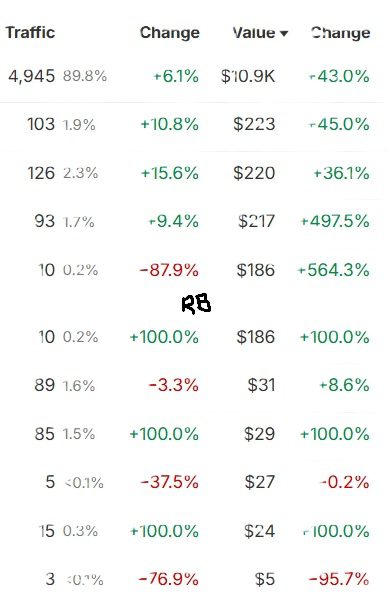
I work with cannabis businesses for a living. I recently helped a single-location dispensary in Grand Rapids increase its homepage traffic by 6.1% and its deal page traffic by 10.8% in just three months. They also got three brand-new pages indexed and generating real organic traffic. None of that happened because we chased AI trends. It happened because we executed the fundamentals most dispensaries skip.
Let me break down exactly what’s working in 2026 and what’s just SEO in a Halloween costume.
First, Let’s Talk About the AI Hype
I get it. AI Overviews are everywhere. Google AI Mode hit 75 million users. Everyone’s freaking out about zero-click searches.
Here’s the thing. Ahrefs’ December 2025 study of 300,000 keywords found that AI Overviews reduce clicks for position #1 by 58%. That’s a real number. I’m not going to pretend it isn’t.
But read the fine print. That 58% impact hits informational queries. “What is the difference between indica and sativa?” Those searches. Not “dispensary near me.” Not “weed delivery Grand Rapids.” Not “buy edibles open now.”
That same Ahrefs study found only 7.9% of transactional local searches trigger an AI Overview at all. The bottom-funnel searches that actually put customers in your store? Google still serves those through the local pack and Maps, not an AI paragraph.
There’s also a wrinkle specific to cannabis. Google’s safety systems treat cannabis as YMYL content (Your Money or Your Life). That classification makes Google hesitant to generate AI-generated answers to controlled-substance queries. It’s counterintuitive, but the same restriction that makes paid ads a serious uphill battle also keeps AI Overviews off a lot of your highest-converting search terms.
The writing’s on the wall: the AI panic is mostly affecting publishers and informational content sites. HubSpot reportedly lost 70-80% of its organic traffic. Travel blogs are decimated. But if you’re a single-location dispensary trying to get more walk-ins this week? Different game entirely.
What About GEO, AEO, and LLMO?
My SEO feeds have been flooded with these terms for two years. My reaction every single time: here we go again.
Jeremy Moser, co-founder of uSERP, said it better than I could. He told Digiday: 80% of GEO is good, fundamental SEO. If your agency isn’t telling you that, they’re selling you something.
Google’s own Danny Sullivan put it even simpler: “Good SEO is good GEO.” Google’s official documentation states there are no additional requirements to appear in AI Overviews beyond standard SEO best practices.
I wrote a whole post on this. GEO, AEO, LLMO: they’re SEO in disguise. New acronyms, same fundamentals. Don’t let anyone charge you separately for them.
No buzzword bingo. Just the real talk.
So What Actually Gets Dispensaries to the Top of Google?
Four things. In this order. The rest is noise.
1. Your Google Business Profile Is Your Most Valuable SEO Asset
I say this to every cannabis client I take on. Your GBP is where you win or lose local search. Full stop.
According to Google’s own data, businesses with complete profiles are 2.7x more likely to be considered reputable, 70% more likely to attract visits, and 50% more likely to lead to a purchase. Birdeye’s 2024 State of GBP report found fully verified, fully populated profiles generate 4x more website visits than incomplete ones.
The average GBP listing generates 81 monthly actions: calls, clicks, direction requests. That’s 81 potential customers you either capture or hand to your competitor.
For cannabis businesses specifically, Google classifies your category as “Cannabis Store,” and that limits what you can do. No Posts section. No Products. No Bookings. Those features are locked. But here’s what you can do right now:
- Make sure “Cannabis Store” is your primary category. Do not deviate from this.
- Keep your hours obsessively accurate. Inaccurate hours are the number one complaint in dispensary reviews and they kill your visibility.
- Upload high-quality, geo-tagged photos on a regular cadence. Businesses with photos get 42% more direction requests (Google data).
- Add your order/menu URL. Link directly to your pre-order page.
- Use attributes: “In-store shopping,” “Curbside pickup,” “Wheelchair accessible entrance.”
One thing people sleep on: Whitespark’s research found being open at the time someone searches is now a top-5 local pack ranking factor. Your hours need to be correct, and you need to be the place that shows up as “open now.” That matters.
2. Reviews Are a Ranking Signal, Not a Nice-to-Have
This is the part most cannabis operators underestimate. I understand why. A lot of your customers don’t want to leave a public Google review saying they bought weed. Privacy concerns are real in this industry.
But the data doesn’t care about that. BrightLocal’s 2026 Consumer Review Survey found that 74% of consumers trust only reviews written in the last three months. And 47% won’t use a business with fewer than 20 reviews.
Whitespark’s 2026 Local Search Ranking Factors Report, which surveyed 47 top local SEO experts, put review recency and velocity in the top 5 local ranking factors. It jumped from #20 in the 2023 survey. That’s a massive shift in a short period of time.
Joy Hawkins at Sterling Sky documented this directly: when review velocity slowed, rankings dropped.
🎉🎉If you haven't signed up for our free webinar Thursday, you're gonna want to do that. Today, my team discovered a NEW ranking factor that I have not published yet (blog + video coming soon). This is very recent, something that changed in the last few weeks after the last core… pic.twitter.com/VL1JOxrE9R
— Joy Hawkins (@JoyanneHawkins) December 4, 2023
When it resumed, rankings recovered. The correlation is that clean.
You need a system for requesting reviews. Every time. From every customer who had a good experience. Text them, email them, train your budtenders to ask. Make it as easy as possible. QR codes at the register, a link in your receipt email, a follow-up SMS after an online order. Whatever it takes.
Top dispensaries in competitive markets have 200+ reviews. If you have 30, you already know why you’re not in the 3-pack.
3. Fix Your Menu or Lose Thousands of Product Searches Every Month
This is the single most widespread technical SEO failure I see across the cannabis industry.
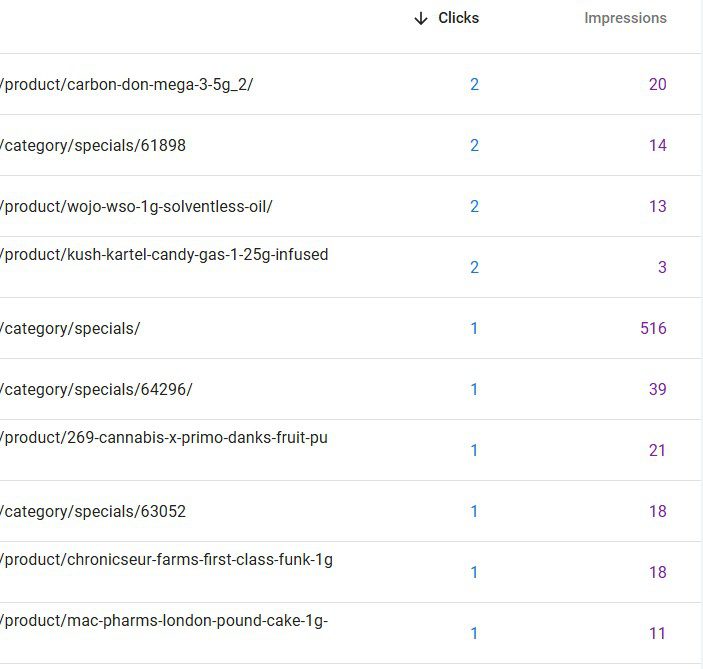
Most dispensaries use Dutchie, iHeartJane, or Weedmaps for their online menus. All three default to iframe embeds. Google cannot crawl or index an iframe. That means every product on your menu, every strain name, every category page, everything inside that iframe is almost completely invisible to search engines.
Think about what you’re giving up. According to Aperture Growth’s keyword data, “dispensary near me” alone generates 2.24 million monthly searches. But there are an estimated 10 million or more product-related cannabis searches every single month. People searching for specific strains, edibles, concentrates, and tinctures. If your menu is an iframe, you’re basically invisible for all of it.
Solutions exist. Dutchie offers E-Commerce Pro and Dutchie+ headless API tiers. iHeartJane has Jane Boost (iframeless) and Jane Roots. Ask your menu provider specifically about SEO-optimized options. If they don’t know what you’re talking about, that’s a problem.
Pro Tip: While you’re at it, make sure your age-verification gate isn’t blocking search engine crawlers. I’ve audited sites where Googlebot encountered an age gate and couldn’t index any pages. Your whole website is invisible. That’s an easy fixable problem.
4. Build Location Pages That Actually Earn Rankings
If you have a single location, you need one solid location page. If you have multiple, each one needs to be uniquely written. Not templated. Not 90% identical with the city name swapped out. Unique.
Every location page needs: a title tag with your city and/or neighborhood, crawlable NAP (name, address, phone) in actual HTML, LocalBusiness schema markup with geo coordinates, an embedded Google Map, and on-page content that’s specific to that location. What’s it near? What neighborhood? What does parking look like? What makes that location unique?
One underutilized tactic: conquest pages. If you’re in Grand Rapids but you want to capture searches from Kentwood, Wyoming, or Walker, build pages targeting those communities. “Cannabis dispensary serving Kentwood.” You don’t need a physical address there. You need a compelling, relevant page that demonstrates you serve that area.
This is exactly the kind of work that produced new organic traffic for my Grand Rapids client. We built a new neighborhood location page that went from zero to generating consistent organic sessions within the three-month window. The page for the best dispensaries in Grand Rapids? Same thing. New. Indexed. Driving traffic.
The Cobbler’s Kids Have No Shoes
I want to be real with you about something.
My own SEO niche (SEO professionals, digital marketers) is one of the most competitive spaces on the internet. I don’t rank for my own head terms. I know exactly why. The competition is insane, and I focus my time on client work.
But cannabis? Cannabis SEO is competitive, no question. There are over 15,000 dispensaries in the United States now. In legal states, every metro has five, ten, or twenty dispensaries all competing for the same local market. It’s not easy.
Here’s the difference. My personal niche competes against every SEO blog and agency on the internet. Your local dispensary competes against a handful of businesses within a few miles of your storefront. You can win that fight. I’ve watched it happen.
The dispensaries that are winning right now are not the ones chasing GEO strategies. They’re the ones who got their GBP complete, built a review-generation system, fixed their menu indexing, and published real, location-specific content. That’s it.
One More Number You Should Know
Weedmaps and Leafly have lost 46% of their combined organic traffic over the past two years.
Read that again. It changes everything about how you should approach this.
During that same period, traffic to individual dispensary websites grew by 103%. The era of marketplace dependence is ending. According to Dispense’s State of Cannabis SEO analysis, the aggregate organic traffic of all individual retailer websites now surpasses all marketplace traffic combined.
Customers are searching for dispensaries directly. Not through aggregators. That traffic is up for grabs. The dispensaries showing up are the ones who treated SEO like the revenue channel it actually is, not a line item to cut when margins get tight.
BrightLocal put it well: showing up for bottom-of-funnel searches is more important than ever right now. Because while AI is stealing clicks from mid-funnel informational content, “dispensary near me” remains a high-intent, action-driven search. Google’s own data shows 76% of people who search for a local business visit within 24 hours.
That’s your customer. Don’t let an iframe menu or an incomplete GBP hand them to the dispensary down the street.
Where to Start If You’re Overwhelmed
I get asked this constantly. There’s a lot here. So let me make it simple.
Do these four things this week:
- Audit your GBP. Is every section filled out? Are your hours correct? Do you have at least 10 recent photos? Is your menu URL in the profile?
- Count your reviews. How many do you have? How recent is the most recent one? If you don’t have a system to ask for reviews, build one today.
- Test your menu. Google “site:yourdomain.com” and see how many pages are indexed. Then check if any of those pages contain your actual product names. If not, your menu is an iframe and you need to talk to your provider.
- Check your location page. Does it have your full address in HTML? Does it have schema markup? Does it have unique content? If it’s a thin page with just a map embed and your hours, it’s not working for you.
If you’re ready to go deeper on any of this, I work with cannabis businesses through Evergreen Digital Services. We focus exclusively on organic search for cannabis and we don’t sell you acronyms. We sell you results.
I’ve been feeding the algorithm since 1996. The platforms change. The fundamentals don’t. And right now, the fundamentals are exactly what your competitors are ignoring.
That’s your edge. Take it.
[…] need to know how to get to the top of Google maps to actually drive foot […]
[…] is trash, no amount of futuristic tech is going to save you. You still need to understand how to get your cannabis business to the top of Google using the classic methods that actually […]